
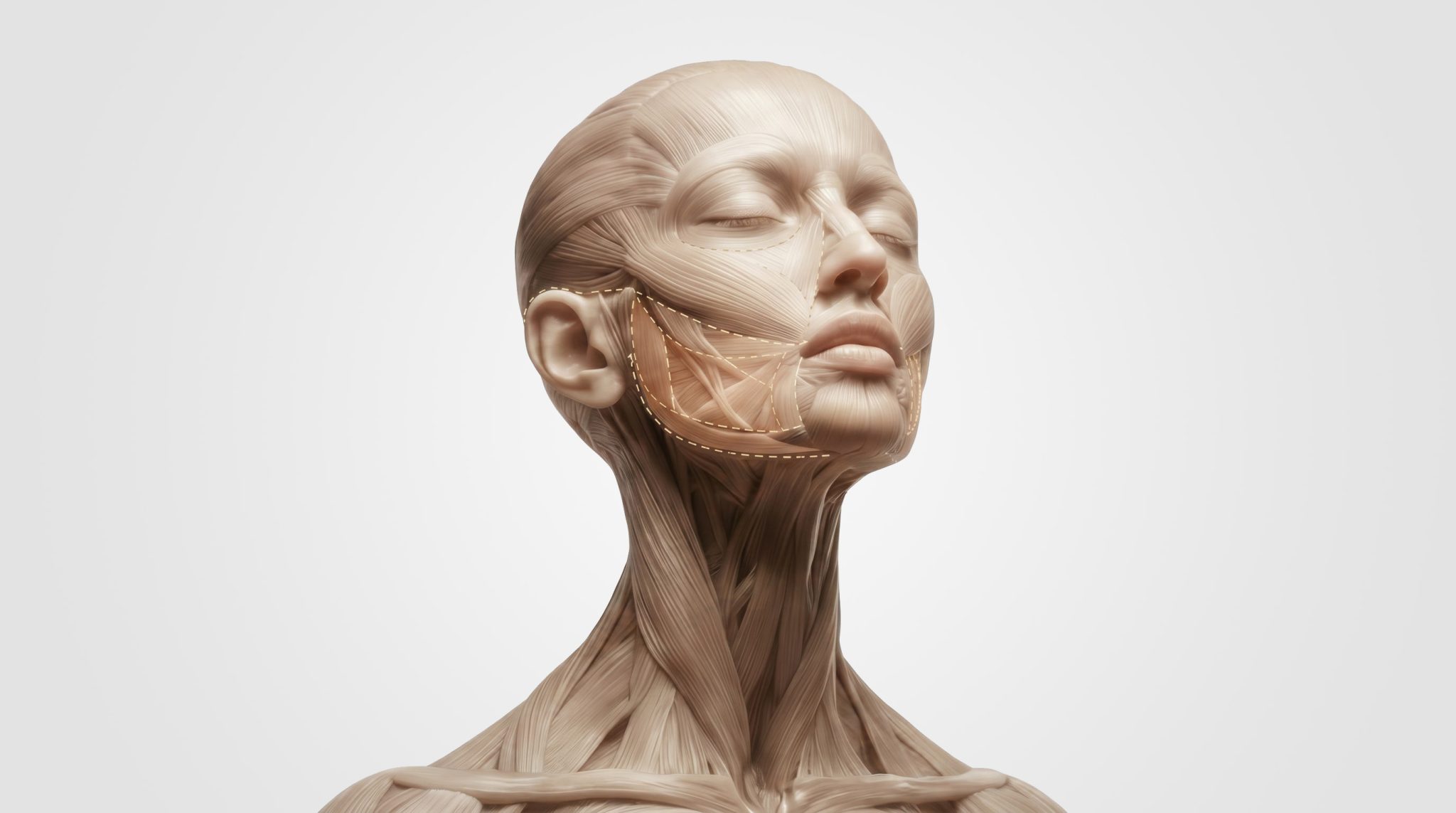
A submental incision provides access to the deeper structures of the central neck, including the platysma muscle, subplatysmal fat, and deeper neck compartments. It allows the surgeon to directly tighten the platysma and improve neck definition and cervicomental angle.
A preauricular incision is placed in the natural crease just in front of the ear and is commonly used in facelift surgery to access deeper facial structures. It allows repositioning of the SMAS layer while keeping the scar discreetly hidden within the ear’s natural contours.
The cheek fat pad is mobilized because it descends with age due to gravitational descent and ligamentous laxity, contributing to midface flattening and deepening folds. Releasing it allows for superior repositioning, restoring youthful midface volume and contour.
An occipital (posterior hairline) incision is used when additional access or skin redraping is needed in the lateral or posterior neck, typically in more extensive or revision facelifts. In less extensive cases, lifting can often be achieved with preauricular and postauricular incisions alone.
Releasing retaining ligaments refers to carefully dividing the fibrous attachments that anchor facial soft tissues to the underlying skeleton, which restrict natural tissue mobility. This allows the SMAS and overlying tissues to be repositioned more freely for a more natural and effective lift.
The SMAS is a fibromuscular support layer that connects the facial expression muscles to the skin, allowing facial movement while also providing structural support to the cheeks, jawline, lower face, and neck.
