
Deep Plane Facelift

Unlike traditional facelifts that primarily place tension on the skin, a deep plane facelift addresses the deeper structural anatomy responsible for facial aging.
During the procedure, the SMAS layer (superficial musculoaponeurotic system) and deeper facial soft tissues are carefully elevated and mobilized as a unified layer. Facial retaining ligaments are selectively released, allowing the descended cheek fat pads and midfacial tissues to be repositioned upward and slightly backward into a more youthful anatomical position.
Once the deeper structures are restored, the skin is softly redraped over the repositioned foundation with minimal tension. This approach avoids an overly tight or “pulled” appearance and instead creates results that feel refined, natural, and expressive.

A Modern Philosophy of Facial Rejuvenation

Modern facial rejuvenation is guided by a simple principle:
Lift the foundation, not the surface.
By restoring deeper structural support rather than relying on skin tension alone,
deep plane facelifts are able to achieve results that appear softer, more youthful, and remarkably natural.
Importantly, the facial muscles themselves are typically preserved.
The procedure focuses on mobilizing fascial and connective tissue planes while carefully protecting the delicate facial nerve anatomy.

The Procedure

The Deep Plane Facelift is performed under general anesthesia or IV sedation in a fully accredited surgical facility. The surgery typically takes 3 to 5 hours, depending on the extent of correction needed. Key steps include:
Incisions are meticulously designed to follow the natural contours of the face and hairline, allowing scars to remain exceptionally discreet once healed.
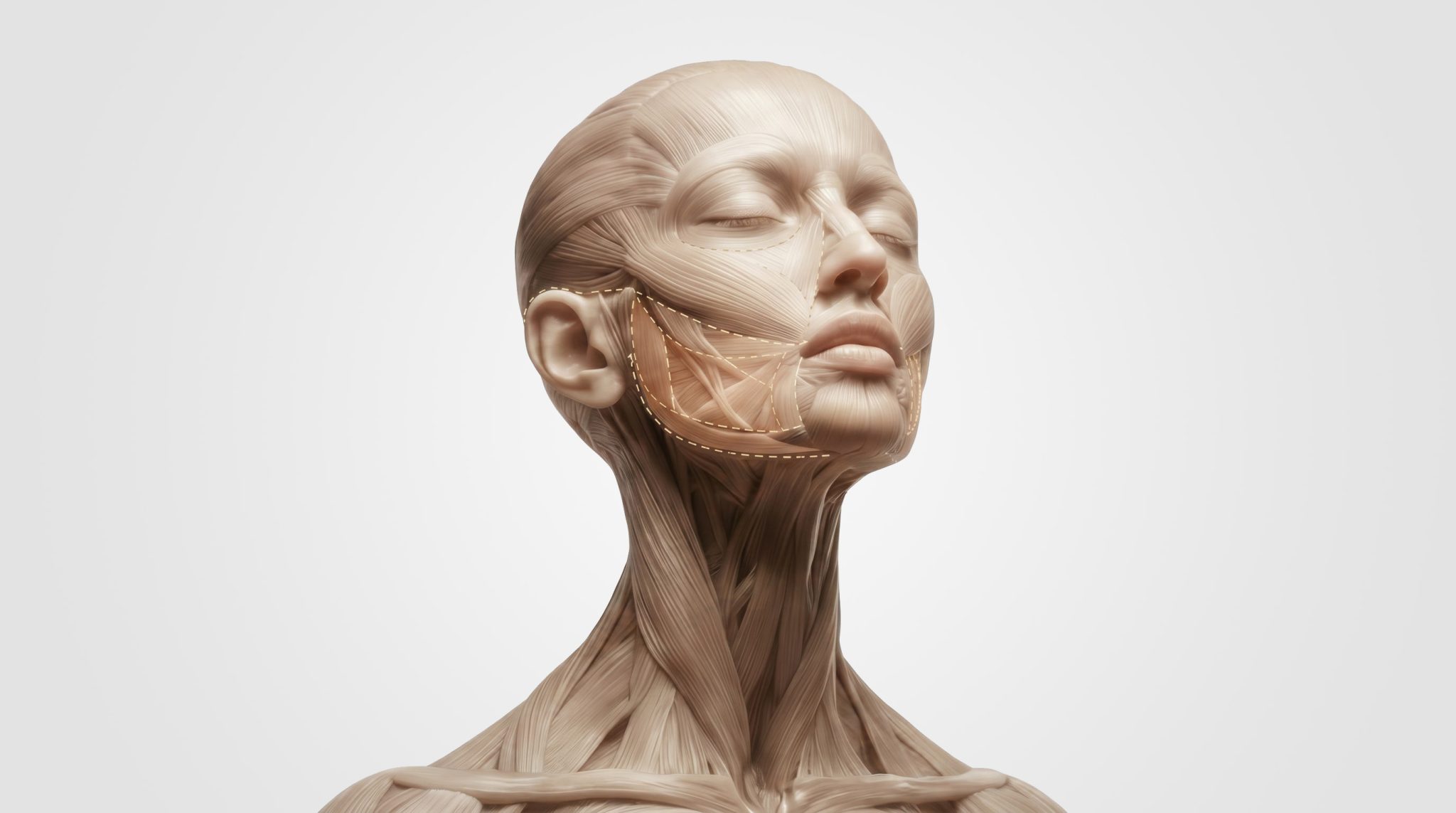
The facelift incision typically begins within the temple or hairline region and continues along the natural crease in front of the ear — known as the preauricular incision. From there, it gently curves around the earlobe and extends behind the ear, allowing access to the jawline and neck tissues while remaining carefully concealed within natural folds and hair-bearing areas.
In some patients, the incision may extend slightly into the lower scalp or occipital hairline behind the ear to facilitate more comprehensive neck rejuvenation and soft tissue redraping.
A small submental incision beneath the chin may also be utilized when refining the neck. This allows for platysma muscle tightening, contouring of excess neck fullness, and enhancement of jawline definition.

Submental incision

A submental incision provides access to the deeper structures of the central neck, including the platysma muscle, subplatysmal fat, and deeper neck compartments. It allows the surgeon to directly tighten the platysma and improve neck definition and cervicomental angle.

Pre auricular incision

A preauricular incision is placed in the natural crease just in front of the ear and is commonly used in facelift surgery to access deeper facial structures. It allows repositioning of the SMAS layer while keeping the scar discreetly hidden within the ear’s natural contours.

Mobilze cheek fat pad

The cheek fat pad is mobilized because it descends with age due to gravitational descent and ligamentous laxity, contributing to midface flattening and deepening folds. Releasing it allows for superior repositioning, restoring youthful midface volume and contour.

Hairline / occipital incision

An occipital (posterior hairline) incision is used when additional access or skin redraping is needed in the lateral or posterior neck, typically in more extensive or revision facelifts. In less extensive cases, lifting can often be achieved with preauricular and postauricular incisions alone.

Release retaining ligaments

Releasing retaining ligaments refers to carefully dividing the fibrous attachments that anchor facial soft tissues to the underlying skeleton, which restrict natural tissue mobility. This allows the SMAS and overlying tissues to be repositioned more freely for a more natural and effective lift.

SMAS layer

The SMAS is a fibromuscular support layer that connects the facial expression muscles to the skin, allowing facial movement while also providing structural support to the cheeks, jawline, lower face, and neck.

Recovery & Results

Recovery from a Deep Plane Facelift is slightly longer than a traditional facelift due to the deeper dissection, but most patients find the process very manageable.
First 5–7 days: Swelling and bruising are most noticeable. Rest with your head elevated is recommended.
1–2 weeks: Stitches are removed. Most patients feel comfortable returning to work using light makeup to camouflage any residual bruising.
3–4 weeks: You can resume social activities with confidence. Swelling continues to decrease rapidly.
3–6 months: Final results become fully visible as all swelling resolves and tissues settle into their new position.

Patients typically enjoy a refreshed, rested appearance with improved facial contours and skin tone. Results are long-lasting and continue to look natural as you age.